
New Energy Battery Cell Envelope Appearance Inspection machine FS-PD
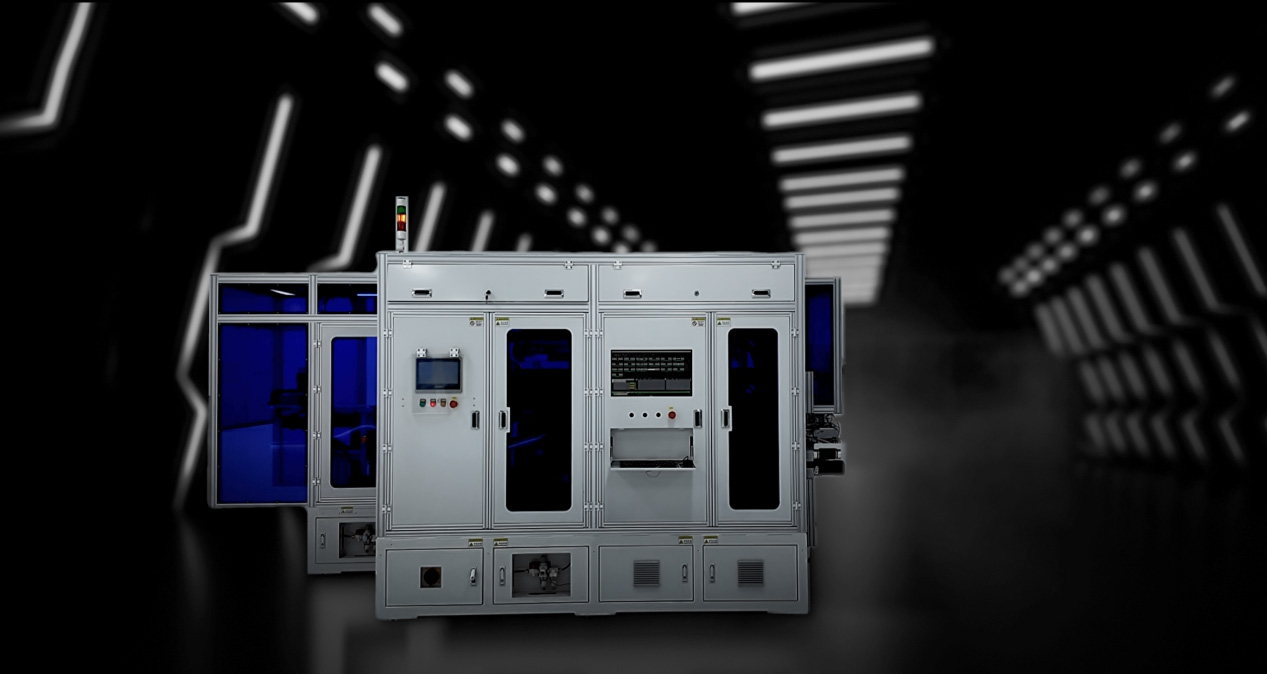
This equipment is Focushigt's full inspection device for new energy prismatic/blade cell envelopes, coatings, and UV-treated cell appearances. Through 2D/2.5D/3D imaging technologies, combined with independently developed AI software and Focusight's new energy battery cell inspection large model, it achieves six-sided appearance defect detection, process traceability, and repair. By wiping and cleaning fixed positions such as explosion-proof valves/poles, it reduces the proportion of erasable defects caused by processes (injection/welding) and improves overall yield. Additionally, it traces and locates process defect links (e.g., envelope bubbles) through reports to guide process improvement and enhance process yield. It can be equipped with a defect repair module to repair defects such as bubbles and pole scratches.
Product Features
Efficient and Easily Replaceable Conveyance Mechanism
Adopts alternating/loop line conveyance mechanism. Product changeover is achieved by replacing grippers, module components, rapid adjustment of flow channels, and simple adjustment of vision modules.
Highly Compatible System Imaging
Compatible with prismatic and blade cell envelope, coating, and UV processes; covers top cover surfaces (including poles, plastic rings, explosion-proof valves, QR codes, top patches), large surfaces, narrow surfaces, bottom surfaces, 8 edges, folded edges/corners, and window areas.
Comprehensive Detection of Typical Defects
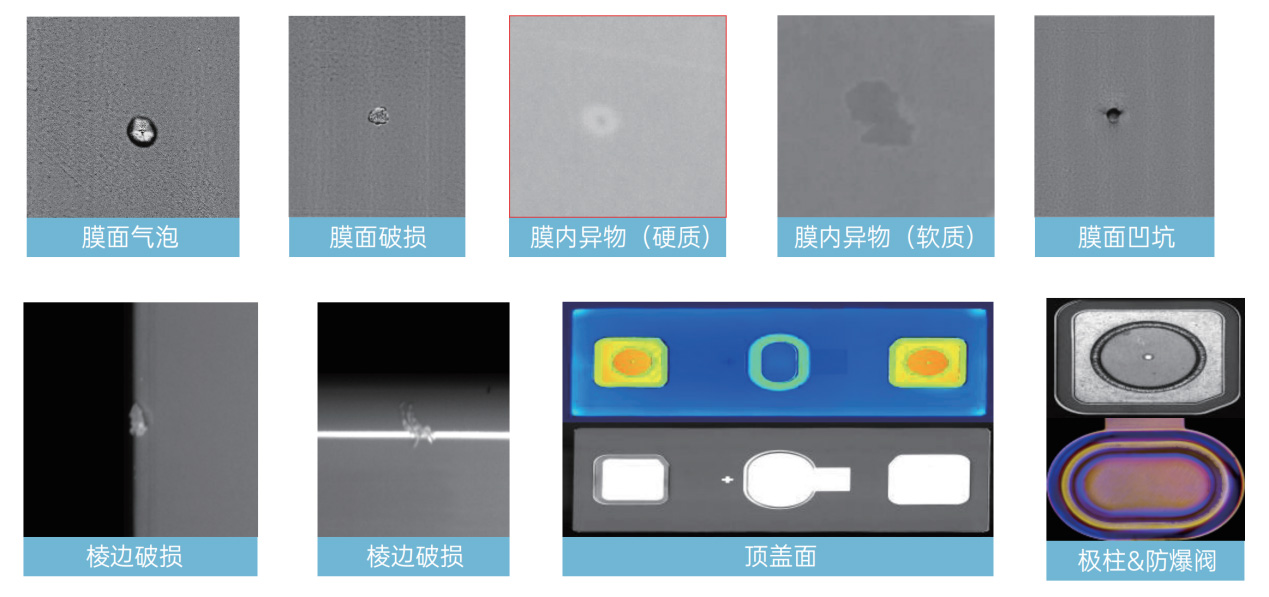
Uses 2D/2.5D/3D imaging technologies for full coverage imaging of six cell surfaces, enabling identification and differentiation of soft/hard foreign objects in the film, imaging of key pain points such as explosion-proof valve electrolyte, explosion-proof valve aluminum foil deformation, and edge pits/damages/bubbles.
Precise Detection
Independent R&D: Core algorithms, software, and defect large models are independently designed and developed by Focushigt.
Differentiation between height and non-height defects on film surfaces.
Focusight's proprietary imaging system for distinguishing soft and hard foreign objects in films, with a differentiation rate of 99%.
Million-level film defect database AI large model, covering over 98% of defects.
Explosion-proof valve electrolyte detection: Capable of imaging transparent electrolytes without missed inspections.
Compatible with imaging and detection of poles with matte/glossy surfaces, square/circular/hexagonal/octagonal shapes, and fixed processing textures.
Repairable and reworkable diversion of NG products: Classifies detected NG products to achieve separate discharge of repairable and rework-required defects.
Cleaning and Repair
Cleans electrolyte by wiping pole and explosion-proof valve surfaces with lint-free cloths and solvent.
Performs roller pressing repair and re-inspection for film surface bubble defects.
- Equipment size (excluding drawstring):4500*3500*2300(mm)
- Production capacity(PPM):Blue film standard machine 24PPM
- Detection capability: 0% missed detection rate (non safety items<0.2%) Over detection rate:<3%
- Software configuration:FS-Lighting/FS-AI/FS-MES/FS-Judge
Our Value
For Production Lines
a. Rapid defect identification and localization, dynamic tracking and improvement of production yield
b. Guiding manual re-judgment and rework, rationalizing manpower deployment, and improving production line efficiency
c. Reducing labor input, lowering management difficulty and costs
For Manufacturing Processes
a. Quickly identifying top process defect items and their distribution, effectively guiding process improvement
b. Clarifying the rationality of defect detection through a rapid re-judgment system and formulating relevant specification parameters
c. Continuously tracking process improvement achievements, conducting effective deviation analysis, and achieving yield improvement goals
For Quality Managers
a. Setting quality standards and inspection methods for customers/in-house
b. Traceability and analysis reports for customer complaints
c. Reducing customer complaints
d. Providing quality analysis tools, basis for quality rewards/penalties, and quality improvement directions
For Business Leaders
a. Industry trends, new equipment planning, and enhancing competitiveness of existing equipment
b. Helping enterprises increase revenue:
Quality standardization, quality linkage, customer factory audits, and order acquisition
Fewer quality complaints and penalties
c. Cost-saving through full-process control of quality, manpower, and processes
d. Efficiency improvement: Visualization of inspection results, controllable delivery, and data-driven operations
Copyright Focusight Technology Co., Ltd. . All rights reserved